The War on Waymo: Autonomous Vehicles Face Mounting Opposition from Labor Unions and Public Sentiment
Autonomous vehicle (AV) companies like Waymo are encountering significant resistance from labor unions, particularly the Teamsters, and a skeptical public, despite AVs' proven safety benefits. This opposition, exemplified by New York City's decision to let Waymo's testing permit expire, highlights a growing conflict between technological advancement and job displacement concerns. The article argues that while technology ultimately prevails, a more effective strategy for labor would be to negotiate for worker protections rather than attempting to block innovation entirely.
The Growing Conflict Over Autonomous Vehicles
The rollout of autonomous vehicles (AVs) is becoming increasingly complex, marked by a significant clash between technological innovation and labor concerns. Despite compelling data indicating that AVs, such as Waymo's, drastically reduce accidents and fatalities compared to human drivers, their widespread adoption faces strong headwinds. This resistance is primarily spearheaded by powerful labor unions like the International Brotherhood of Teamsters, who view AVs as a direct threat to millions of driving jobs across various sectors, from taxi and rideshare services to long-haul trucking. The recent decision by New York City's mayor to let Waymo's testing permit expire, explicitly citing the protection of taxi drivers' livelihoods, underscores the political and social dimensions of this conflict.
Labor's Stance and the Threat of Job Displacement
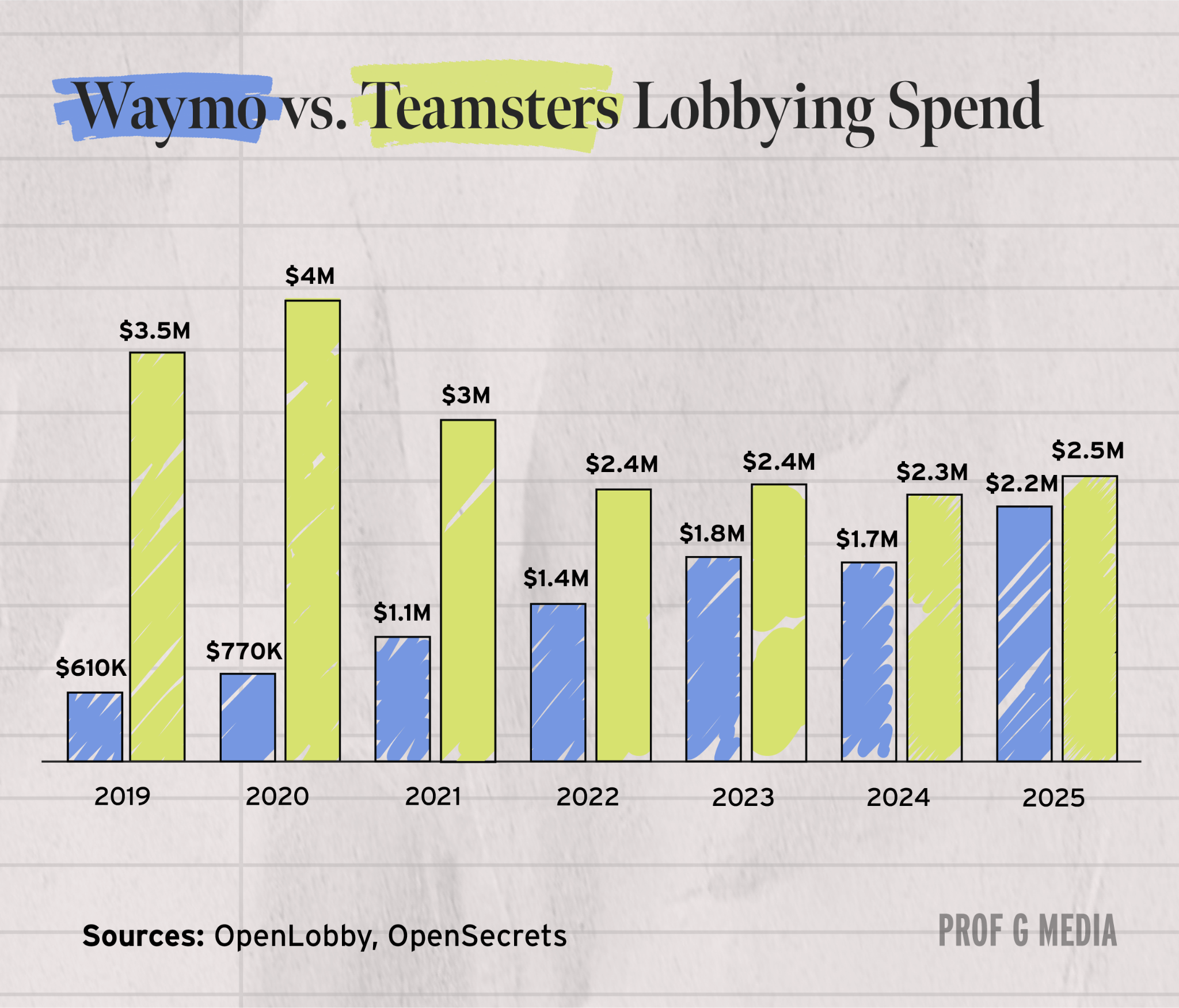
The Teamsters, representing 1.3 million members, have a long history of lobbying against autonomous driving legislation, successfully influencing policy at both federal and state levels. Their efforts are driven by the very real prospect of widespread job displacement. The article highlights that approximately 4.6 million jobs in the U.S. — including taxi, limousine, food delivery, small-package delivery, and long-haul trucking — are at risk. This represents nearly 3% of the American workforce, with driving being the most common occupation for young men without a college degree. For the Teamsters, this isn't just about protecting members' jobs; it's about the union's very existence, as a decline in membership due to automation would severely impact its finances and political influence.
Public Perception and a Path Forward
Beyond union opposition, public sentiment towards AI and autonomous technologies is also souring. Despite AVs demonstrating superior safety records, public perception of their ability to improve road safety has declined. This skepticism, coupled with the visceral nature of seeing AVs on city streets, contributes to a general unease about a future perceived as dystopian by many. The article draws parallels to historical labor struggles against automation, such as the Luddites and longshoremen, noting that technology ultimately prevails. It suggests that instead of outright blocking AVs, a more effective strategy for labor would be to negotiate for worker protections, such as retraining funds, transition payments, and safety nets for displaced drivers, mirroring the successful negotiations by longshoremen in the 1960s. This approach would acknowledge the inevitability of technological progress while mitigating its adverse effects on the workforce.
Implications for Audit and Assurance Professionals
- Risk Management: Internal audit and assurance professionals in the transportation, logistics, and technology sectors must closely monitor the evolving regulatory and social landscape surrounding AVs. The interplay between technological advancement, labor relations, and public perception creates significant operational, reputational, and compliance risks.
- Strategic Planning & Workforce Transition: For companies developing or deploying AV technology, assurance professionals should assess the adequacy of strategic plans to address labor opposition, public relations challenges, and potential workforce transition programs. This includes evaluating the financial implications of potential severance packages, retraining initiatives, or union negotiations.
- Ethical AI & Social Impact: As AI-driven technologies like AVs become more prevalent, internal audit should consider the broader ethical implications and social impact. This involves assessing how organizations are addressing concerns about job displacement, ensuring fair and transparent deployment practices, and maintaining public trust, which is crucial for long-term success and regulatory acceptance.
Read more
