AI's Impact on Audit Management: Adapt or Be Left Behind
The traditional role of Big 4 audit managers is undergoing a significant transformation due to the rise of Artificial Intelligence. While AI will automate routine tasks, the core functions requiring judgment, skepticism, and client interaction will remain, necessitating a new skill set for future audit leaders. Audit managers must adapt to manage risk, interpret AI outputs, and coach smaller teams to stay relevant in an evolving landscape.
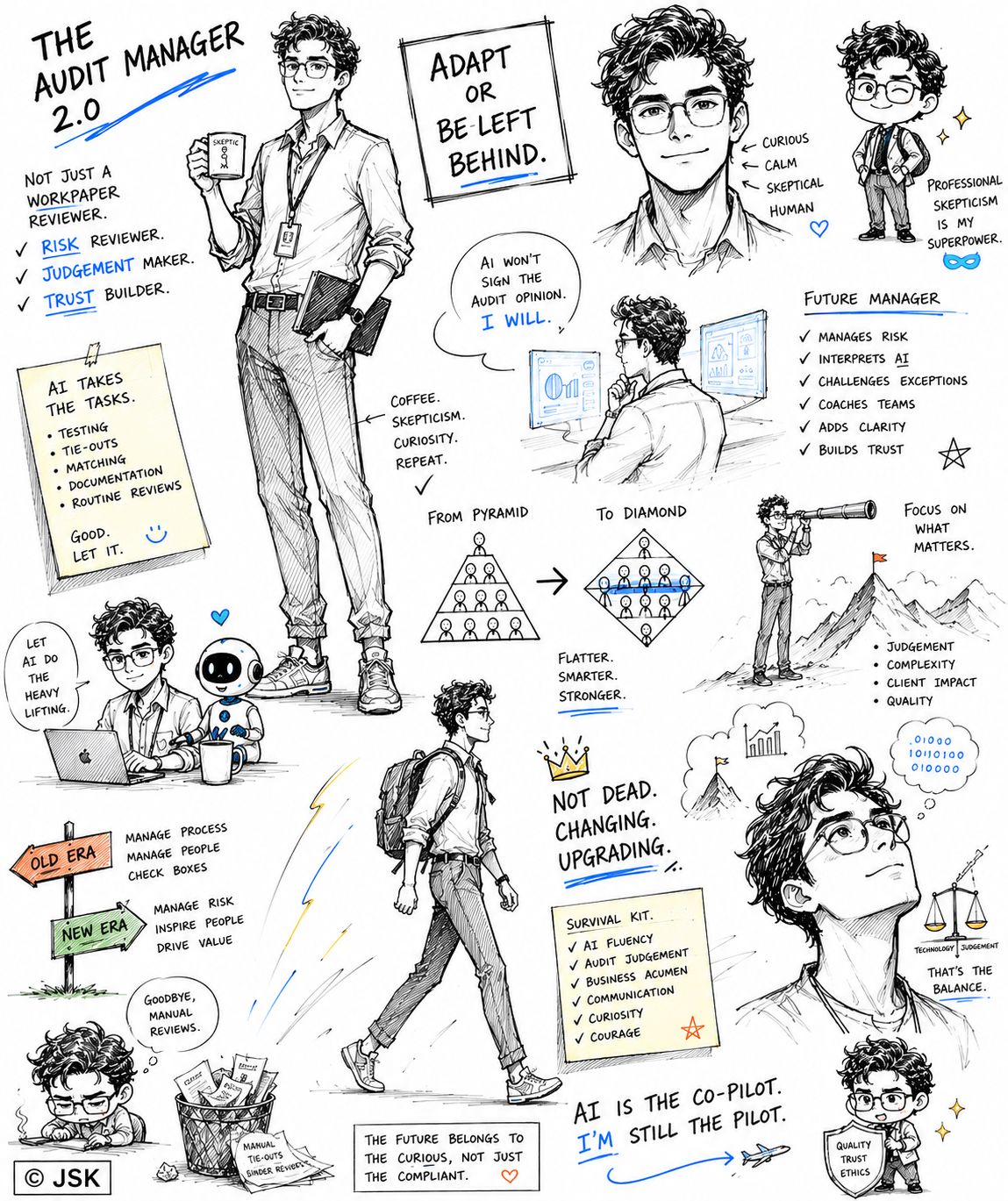
The Evolving Role of the Audit Manager in the Age of AI
The audit profession, particularly the role of the audit manager, is experiencing a profound shift driven by the integration of Artificial Intelligence. Historically, audit operations have relied on a hierarchical 'pyramid model,' where large junior teams performed detailed testing, overseen by managers who coordinated, reviewed, and escalated issues. This structure, characterized by extensive manual processes and repetitive tasks, is now being challenged by AI's capabilities.
AI is poised to automate many of the routine and low-complexity tasks that traditionally consumed a significant portion of an audit manager's time. This includes coordination, repetitive reviews, tie-outs, documentation checks, and basic testing. The efficiency gains from AI in these areas will fundamentally redesign the operational aspects of an audit. However, it's crucial to recognize that audit is not solely a technical or consulting function; it demands human judgment, professional skepticism, critical challenge, regulatory awareness, and accountability. AI can serve as a powerful support tool, but it cannot assume ownership of the audit opinion, which remains a human responsibility.
Consequently, the future audit manager will need to transcend the traditional role of a workpaper reviewer. Their responsibilities will expand to include managing complex risks, critically interpreting AI-generated outputs, challenging exceptions identified by automated systems, and effectively coaching smaller, more specialized teams. Furthermore, they will play a vital role in providing clarity and strategic insights to clients and partners. This evolution underscores that AI is not eliminating audit jobs but rather transforming audit tasks, demanding a proactive approach from professionals to adapt and acquire new competencies to thrive in this rapidly changing environment.
Citation: Oluwasegun K. Alemeru, ACA, MBA, FMVA
Source: LinkedIn
