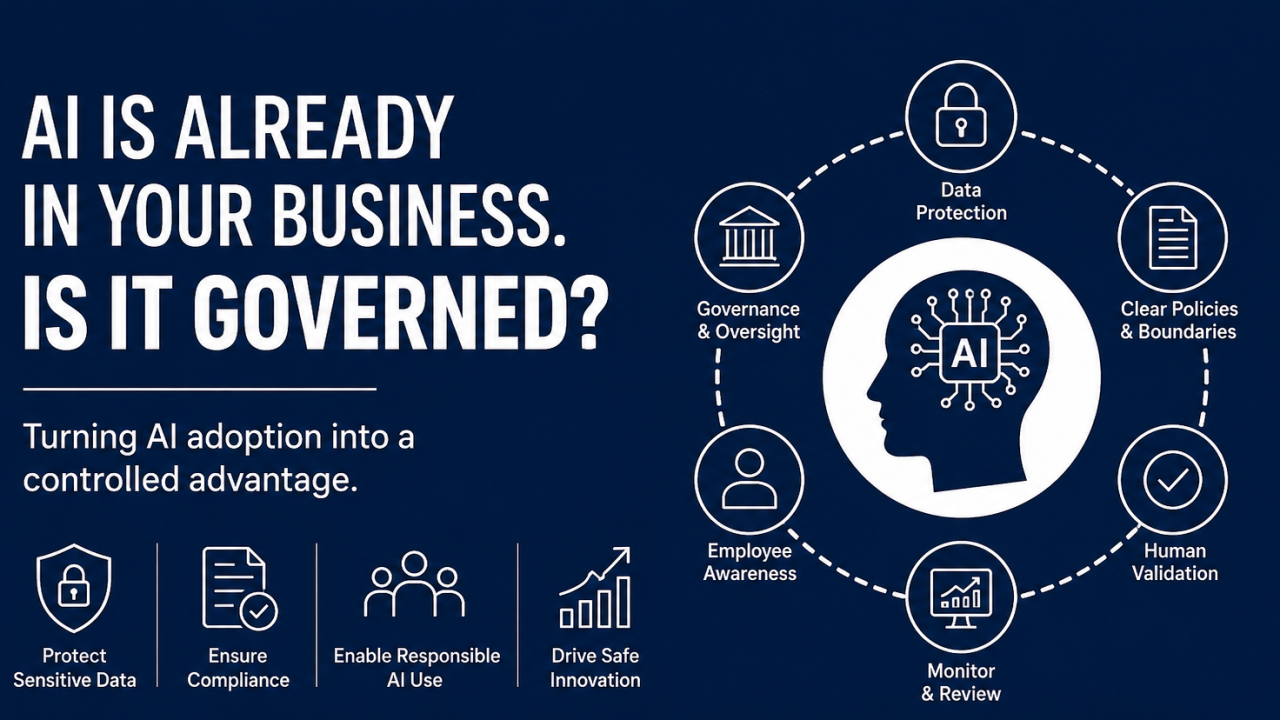
AI Governance: Adapting Control Environments to the Speed of AI
The rapid, often unapproved, integration of AI into daily business operations presents a significant governance challenge for organizations. Traditional control environments are ill-equipped to manage the risks associated with employees using AI tools, particularly public ones, for sensitive tasks. This article emphasizes that effective AI governance is not about restricting adoption but enabling safe and responsible use through clear policies, approved platforms, and continuous monitoring.
The Evolving Landscape of AI Risk for Internal Audit
The proliferation of Artificial Intelligence (AI) within organizations, often driven by individual employee initiative rather than formal approval, has fundamentally altered the risk landscape. Internal audit and assurance professionals must recognize that the primary governance challenge is no longer AI adoption, but rather achieving visibility, control, and accountability over its use. Employees are leveraging AI for tasks ranging from contract summarization to data analysis, frequently utilizing free public tools. While this boosts productivity, it simultaneously introduces significant risks that current control environments are largely unprepared to address, as AI moves sensitive decision-making to individual employees operating in real-time.
Amplified Risks and the Need for Proactive Governance
AI doesn't necessarily create entirely new risk categories but significantly amplifies existing ones by removing traditional operational barriers. Key risks include confidentiality breaches, regulatory and privacy compliance failures, intellectual property loss, and reliance on inaccurate or biased AI outputs. A critical consideration is the irreversible nature of data shared with public AI models, which can be stored, used for training, or surfaced elsewhere. Furthermore, the exposure often stems from well-intentioned employees seeking efficiency, unaware of the hidden costs associated with 'free' tools that monetize user data. Without robust governance, these risks escalate rapidly, impacting data security, compliance, and decision-making integrity.
Building a Resilient AI Control Environment
Effective AI governance moves beyond outright bans, which are often circumvented, towards enabling safe and responsible adoption. Organizations should establish clear boundaries and provide approved, secure AI platforms for business activities, while explicitly prohibiting sensitive data uploads to unapproved external tools. Key measures for strengthening the AI control environment include:
- Defining and promoting approved enterprise AI platforms.
- Restricting or blocking unapproved public Large Language Models (LLMs) for sensitive tasks.
- Establishing clear policies on prohibited data uploads.
- Extending governance expectations to AI usage on personal devices and external networks.
- Integrating AI governance into existing information security and enterprise risk frameworks.
- Monitoring AI usage patterns and emerging risk indicators.
- Conducting regular awareness and acceptable use training.
- Mandating human validation for AI-generated outputs before critical business decisions are made.
Ultimately, AI governance is a business risk and control imperative that requires continuous awareness, monitoring, and reinforcement of expected behaviors. Boards and executive leadership must view it as an enterprise resilience issue, recognizing that proactive governance will position them to scale AI adoption confidently and responsibly, especially as regulatory scrutiny intensifies.
Read more
